
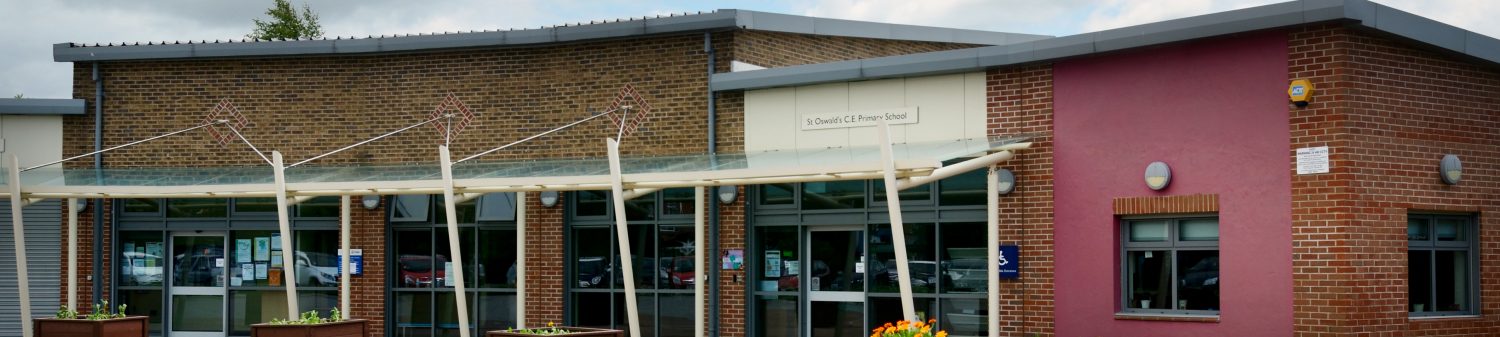
At St Oswald’s, we value the importance of a nurturing ethos and a relational approach in supporting children to reach their true potential and develop as individuals. Our classrooms, and other work spaces, are consciously designed to be safe, calm and interesting places to learn. We consider both the learning and the sensory needs of children when creating displays and aim to use the beauty that is the natural world as our inspiration throughout school. There is an abundance of research evidence stating that children’s learning is most effective when they have a sense of emotional well-being, good self-esteem and a feeling of belonging to their school community.

Support and Nurture for All
At St Oswald’s, we see our nurturing approach towards all pupils is an integral part of our school’s curriculum offer. This offer looks different from child to child, and cohort of children to cohort. Some children will access specific activities to support their SEMH (Social, Emotional and Mental Health) during unstructured times (such as break and lunchtime), others will access this as part of whole-class sessions woven into the curriculum and some children will access this as part of a bespoke group.
It is important to note that all children are nurtured, supported and cared for at our school. Some children may need an additional for periods of time and the level of this will vary dependent on their need, seeing every individual as an individual. We promote self-regulation and identifying emotions. We use the ‘Zones of Regulation’ through school to support our pupils. Further information about this strategy can be identified below.
Our Nurturing Environment
We have a number of areas within school where our activities and interventions can take place: The Den, Inclusion Bases and our Wild Area. These areas are designed to be bridge between school and home/outside; a place where children can feel safe, secure and develop their individual needs further.

The Den
The Den is a welcoming, supportive space where children can access a range of resources and activities to support their social, emotional and mental health (SEMH). The room is equipped with a variety of resources to provide movement breaks, support emotional regulation and deliver targeted interventions. Many of our wellbeing groups and interventions take place in The Den, providing children with opportunities to explore and talk about different experiences, including grief, growing up, anxiety, change and loss. We also use the space to develop children’s confidence, self-esteem and emotional resilience. Alongside this, children can access a wide range of creative activities, crafts and games to help them express themselves, build positive relationships and develop strategies to support their emotional wellbeing.
Inclusion Bases
At St Oswald’s CE Primary School, we have three dedicated Inclusion Bases which provide additional support for children alongside their mainstream class provision. Each base offers a nurturing, structured and supportive environment where children can access learning and experiences that are carefully matched to their individual needs and developmental stages.
Our three bases provide opportunities for children to develop communication, interaction, independence and life skills, while supporting their social, emotional and mental health. They also offer a space for children to regulate, access specific interventions and receive targeted support at appropriate points throughout the school day.
Our provision is organised across three stages:
EYFS Inclusion Base
Our EYFS Inclusion Base provides a developmentally appropriate environment for our youngest children who benefit from a more personalised approach to learning. Provision focuses on early communication, interaction, sensory exploration, physical development, independence and building positive relationships. We draw on the principles of the Engagement Model to recognise and celebrate children’s individual progress, particularly through exploration, realisation, anticipation, persistence and initiation.
KS1 Inclusion Base
The KS1 Inclusion Base continues to build on these foundations, providing a structured and nurturing environment where children can develop their early learning, communication, interaction and independence skills. We use the Engagement Model, where appropriate, to support the assessment of children’s engagement and progress, recognising that development is individual and does not always follow a linear path. Learning experiences are carefully adapted to reflect each child’s strengths, needs and next steps.
KS2 Inclusion Base
Our KS2 Inclusion Base provides a more developed, semi-formal approach to learning, with a focus on functional skills, communication, independence and preparing children for the next stages of their education and life beyond primary school. Learning is personalised and practical, with opportunities to develop essential academic, social and life skills through meaningful experiences and targeted teaching.
Across all three bases, our aim is to ensure that children remain part of their mainstream class community and access their class learning wherever appropriate. Time in an Inclusion Base is additional to mainstream provision and is carefully planned around individual needs. It may include opportunities for emotional and sensory regulation, targeted interventions, pre-teaching, overlearning, small-group work and individual support.
We recognise that every child is different. Our Inclusion Bases allow us to provide the flexibility, nurture and targeted support children need to feel safe, develop confidence, make progress and achieve their individual potential.
The Nest
The Nest is a small, calm and welcoming sensory space designed to support children’s individual sensory needs and emotional regulation. The room includes a bubble tube and a range of calming sensory resources and equipment, providing children with a quiet environment where they can take time away from the busy school day.
The space offers opportunities for children to relax, explore sensory experiences and develop strategies to help them feel calm, safe and regulated. It can be used to support children who may feel overwhelmed, need time to reset or benefit from a quieter, more sensory-focused environment.
Our aim is to provide a safe and nurturing space where children can meet their sensory needs, supporting their readiness to learn and engage positively with school life.

The Forest
Our Wild Area (called the forest) is a special part of our school grounds where we allow nature to flourish and do its own thing! By giving this space room to grow and change naturally, we provide children with opportunities to explore, discover and develop a deeper appreciation of the natural world.
The area offers a wonderful outdoor learning environment, where children can observe wildlife, investigate the changing seasons and enjoy hands-on experiences in nature. There is a dedicated space where a whole class can gather together for outdoor learning, as well as our very own fairy trail! Alongside this, our space has developed into tree swings, climbing apparatus and mud kitchens!
Who are our Pastoral Team?
Although we have a team who oversees pastoral support in school, it is important to acknowledge that all staff have the same priority of ensuring school is a safe and open environment, where everyone is looked after, supported and encouraged to thrive. Our pastoral team consists of:
- Mrs Dunne – Designated Safeguarding Lead
- Mr Barker – Deputy Designated Safeguarding Lead
- Mrs Utley – SENDCO (Special Educational Needs and Disabilities Co-Ordinator)
- Miss Benjamin – ELSA
- Mr Sellers – Sports Pastoral Support

What is an ELSA? What are ELSA sessions?
Our school’s Emotional Literacy and Learning Support Assistants carry out specialist ELSA sessions with some children in school. At St Oswald’s, we recognise that there will always be children and young people who, during the course of their education, will face life challenges that can detract from their ability to engage with learning. Some will require greater support to increase their emotional literacy than others. ELSA is an initiative developed and supported by educational psychologists. It recognises that children learn better and are happier in school if their emotional needs are also addressed.
The majority of ELSA work is delivered on an individual basis or in small group work, depending on what is more appropriate, especially in relation to the areas of social and friendship skills. ELSA sessions take place in our very own ‘The Den’ or in our ‘Wild Area’ which provides a calm, safe space for the child to feel supported and nurtured.
In ELSA we aim to provide support for a wide range of emotional needs:
- Recognising emotions
- Anxiety
- Self-esteem
- Social skills
- Friendship skills
- Anger management
- Loss and bereavement